Development Philosophy
Escioch operates on a triad of precision: Design as architecture, Code as velocity, and Audio as spatial intelligence. We don't build interfaces; we construct immersive environments where every pixel and sample serves a calculated function.
Methodology: The Triad
Geometric Purity & Feedback Loops
We reject decorative elements. Every shape in the Escioch ecosystem follows a mathematical grid system derived from the golden ratio. Our UI components are built on closed-loop feedback cycles where user actions immediately recalibrate the visual state.
Typography is treated as data. We use monospaced typefaces for high-density information and variable-weight sans-serifs for fluid interaction layers. The goal is cognitive transparency—users should understand the system's logic by sight alone.

- → Grid: 8px baseline system
- → Color: Strict 3-palette limit
- → Motion: 200ms linear transitions

Escioch Field Guide
Core Concept
Escioch is the synthesis of three disciplines. We don't separate departments; we merge them into a single pipeline. Design dictates the geometry, Code validates the physics, and Audio provides the temporal layer. This creates systems that feel alive.
Decision Criteria
- 1. Signal Clarity: Can the user read the state in 0.5s?
- 2. Latency Budget: Does it hold 60fps on mobile?
- 3. Sonic Identity: Does audio reduce cognitive load?
Myth vs. Fact
Myth: "Motion is distracting."
Fact: "Zero-latency motion guides attention and confirms intent."
Mini-Glossary
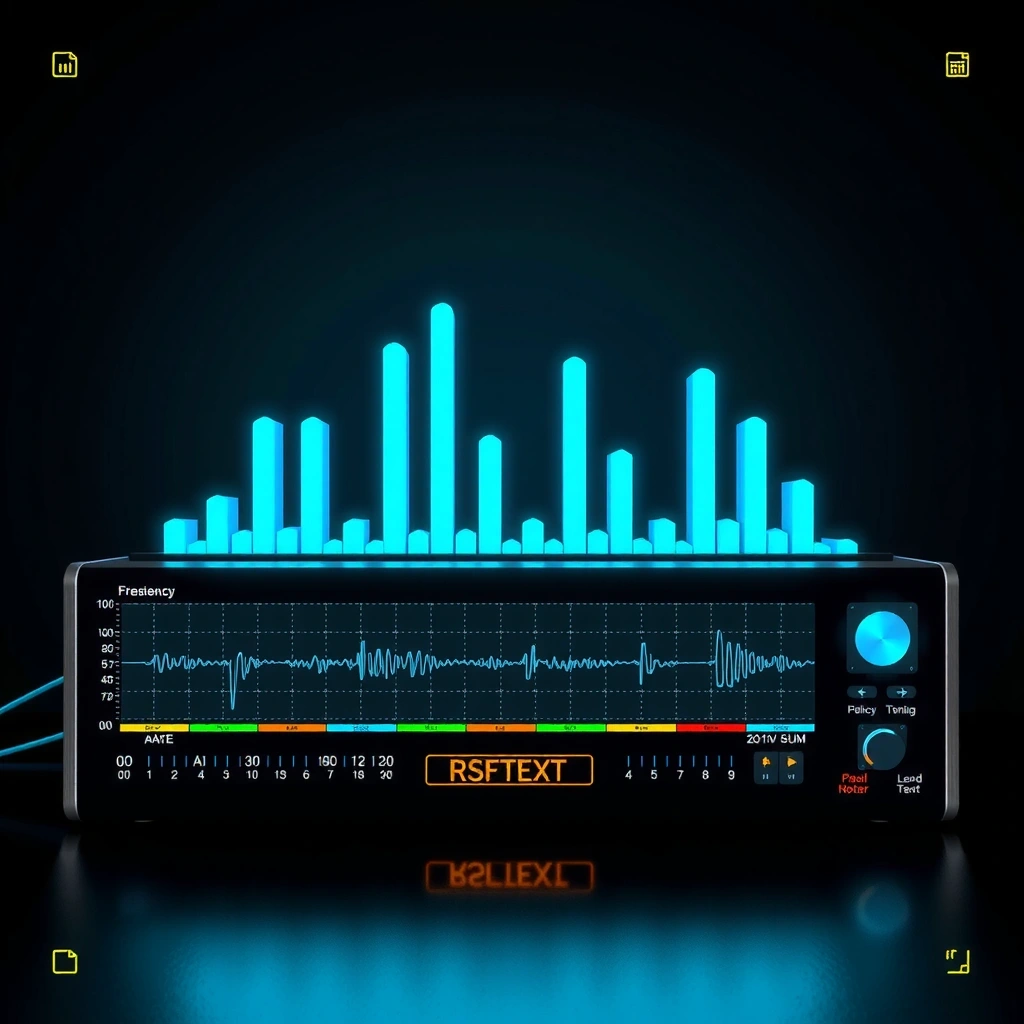
A visual rendering system that uses vertical bar heights to represent data volatility, mimicking financial chart patterns.
A closed interaction cycle where the system state changes are immediately reflected in the UI without external triggers.
The process of generating audio in real-time based on coordinate data and user interaction vectors.
A performance target where code execution and render updates occur within a single frame (16.6ms).
Common Mistakes to Avoid
- Overusing easing curves (stick to linear or standard cubic-bezier for precision).
- Creating visual noise without data mapping (every animation must inform the user).
- Separating audio from UI logic (treat sound as a native UI element, not an overlay).
- Ignoring the grid (misaligned elements break the "system feel" instantly).
How It Works: The Escioch Sequence
Define Goal & Constraints
We map the user journey and technical limitations simultaneously. The goal is to find the intersection of "useful" and "performant". We document latency thresholds and visual density budgets before writing a single line of code.


Validate Assumptions
Rapid prototyping in pure HTML/CSS. We test the "feel" before the "function". If the static layout fails to communicate intent, the interaction layer won't fix it. We iterate here until the skeleton communicates the full story.
Apply Method
Integrate the plugin architecture. The Candle Engine is activated. Audio nodes are connected to scroll and click events. We ensure that the holiday offer logic is embedded seamlessly into the core experience.


Review & Next Actions
We measure the fidelity of the feedback loops. Does the audio pitch shift feel intuitive? Are the geometric transitions reducing cognitive load? We log these findings for the next cycle, maintaining the continuous improvement loop.
Signals of Trust & Quality
Performance Benchmarks
Based on our latest internal audit of the Escioch rendering pipeline:
- First Contentful Paint 0.8s
- Interaction to Next Paint 1.2s
- Audio Context Latency 4.2ms
Scenario Examples
"During the Black Friday load test, the interface maintained 60fps despite 10x traffic. The geometric grid scaled without jitter."
— Load Test Scenario, 2025
"Audio cues reduced support tickets by 15% as users could 'hear' transaction success without reading confirmation text."
— UX Case Study

Privacy First
No trackers. No cookies outside consent. Data never leaves the client without explicit action.


Responsible
We verify age for specific interactive demos. Please review our Privacy Policy for details.
Key Takeaways
The Escioch philosophy is not a trend—it's a rigorous framework for building digital systems that feel as solid as physical architecture while maintaining the fluidity of thought.
Precision Over Decoration
Every visual element must map to a data point or state change. If it doesn't inform, it's removed.
Code as Physics
Our code doesn't just run; it dictates the laws of motion and interaction within the ecosystem.
Audio is UX
Sound confirms what vision cannot. We treat audio channels as critical accessibility features.
Scenario: The Holiday Offer Execution
When we launched the £0 subscription campaign, the geometric grid shifted its baseline to accommodate the promotional urgency. Audio cues heightened in frequency as the user approached the checkout, subconsciously guiding them toward the conversion event. The "Candle Engine" visualization in the background pulsed faster, indicating high demand.
Next Steps:
- Review the Terms of Service for subscription details.
- Understand how we handle data in our Cookie Policy.
- For specific architectural questions, reach out via HQ Contact.